Before Nicole could walk, her mom began noticing early signs that one side of her body moved differently from the other.
At six months old, Nicole’s mom, Susan, noticed something different. While other babies reached for toys with both hands, Nicole only used her left. Her right arm stayed tucked close to her body.
At first, Susan hoped it was nothing serious, but a mother’s instinct told her otherwise.
An MRI before Nicole’s first birthday confirmed she had hemiplegic cerebral palsy, a condition caused by an injury to the brain at birth which affects movement and muscle control on one side of the body. Soon after, they were referred to the Glenrose Rehabilitation Hospital.
While Nicole’s condition affects the right side of her body, she can still walk and run but has very limited fine motor function in her right hand. As she grew older, everyday tasks required extra patience and creativity.
“There are things she wasn’t able to do at first,” Susan says. “Something as simple as zipping a jacket or tying her hair was really difficult because those tasks need two hands.”
But through the Glenrose, Nicole was introduced to new strategies and ways to try. Over time, things that were once hard slowly became victories worth celebrating.
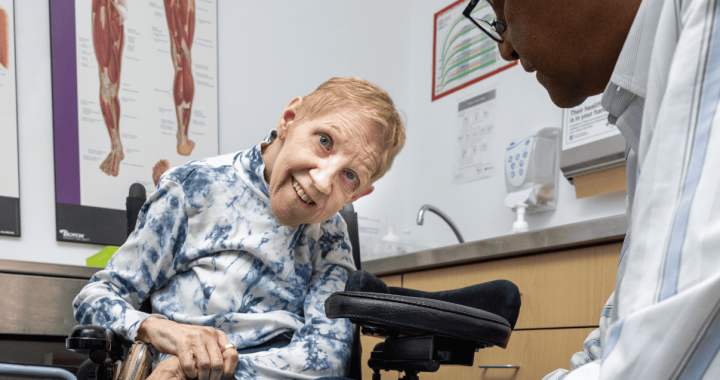
Kathleen, one of Nicole’s occupational therapists, shares that children with hemiplegic cerebral palsy often have an affected non-dominant hand. While therapy may begin by addressing physical challenges, the larger goal is helping children continue participating in the things that bring them joy and confidence.
“Nicole may not be able to perform an activity in the same way as others,” Kathleen says, “but it does not mean she can’t try.”
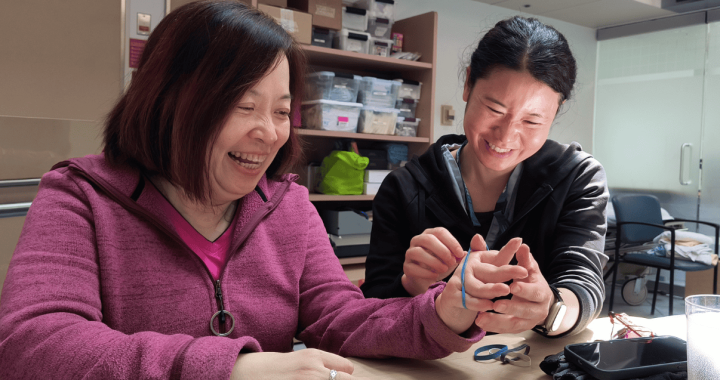
By working closely with families, the Glenrose team adapts activities and creates supports that help children like Nicole continue participating in the things they love in ways that work best for them.
For Nicole, one of those joys came from music.
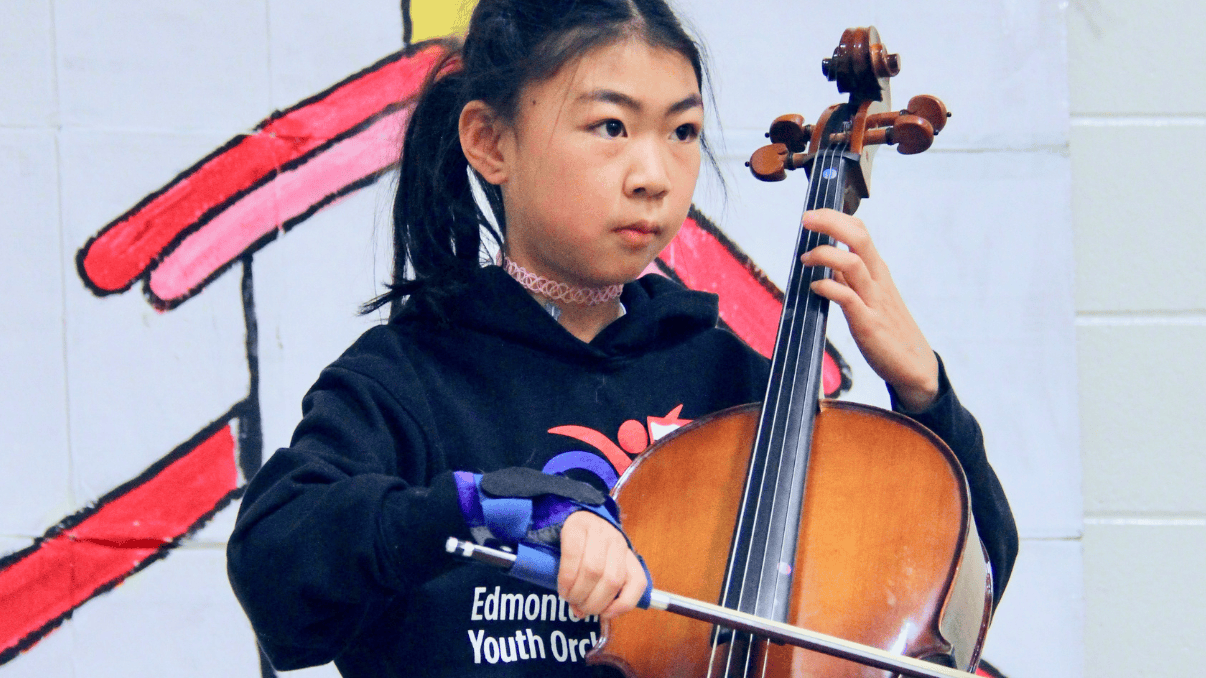
Music had always been part of her family’s life. Her older brother played the cello and her mother played the guitar. Inspired by them, Nicole began learning the cello at just five years old. At first, she practiced posture using a model cello before transitioning to a real instrument a few months later.
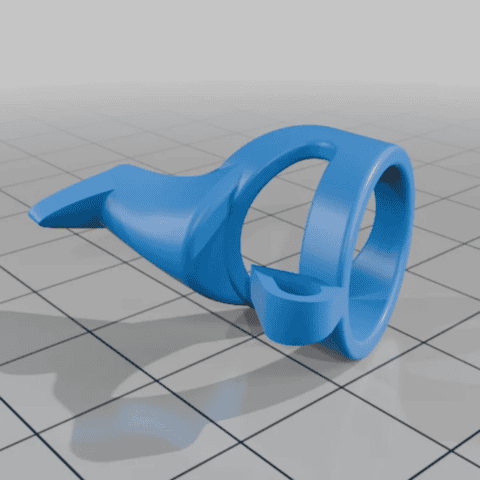
But holding the bow quickly became frustrating. Nicole’s condition caused dystonia, a movement disorder that caused her muscles to tighten and pull her wrist inward involuntarily, making it difficult to control her hand movements and keep hold of the bow.
“She kept getting frustrated because the bow would keep falling,” Susan says.
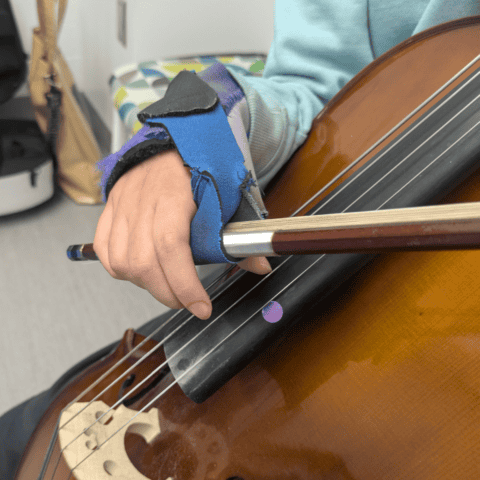
Another challenge came with pizzicato, a technique that requires plucking the strings. Because the bow was already secured to Nicole’s hand, the movement became even more difficult — especially since the Chinese music her family enjoys playing together involves a lot of plucking.
Today, Nicole is practicing to join the Chinese orchestra her brother is part of.
Over the years, Susan says one of the biggest changes was not just Nicole’s progress, but her own perspective as a parent.
“My biggest takeaway is that I thought my child needed to change, but it was me,” she says. “I needed to change the way thought and stop putting limits on her. I used to focus on what she couldn’t do, but I’ve learned that with the right support and programs, she can do so much more.”
Today, Nicole is described by her mom as joyful, playful, and full of life.
“Nicole is a very happy and playful girl,” Susan says. “She knows about her condition, but she never sees it as a bad thing.”