Grip strength matters more than most people think. Often considered a biomarker for overall health, a strong grip is correlated with longevity.
This is why a NAIT student capstone project that started nearly a decade ago is now being lauded for its impact on orthopedic injury recovery, stroke rehabilitation, and neurological conditions that require relearning movement.
“Patients using FEPSim show an average 150 per cent improvement in grip strength and a four- to fivefold gain in dexterity and range of motion compared to baseline,” says Darryl Short, co-founder and president of Karma Medical Products. “When measured against traditional methods, FEPSim delivers a twentyfold functional improvement. These gains translate directly into faster recovery, greater confidence, and a measurable return to independence.”
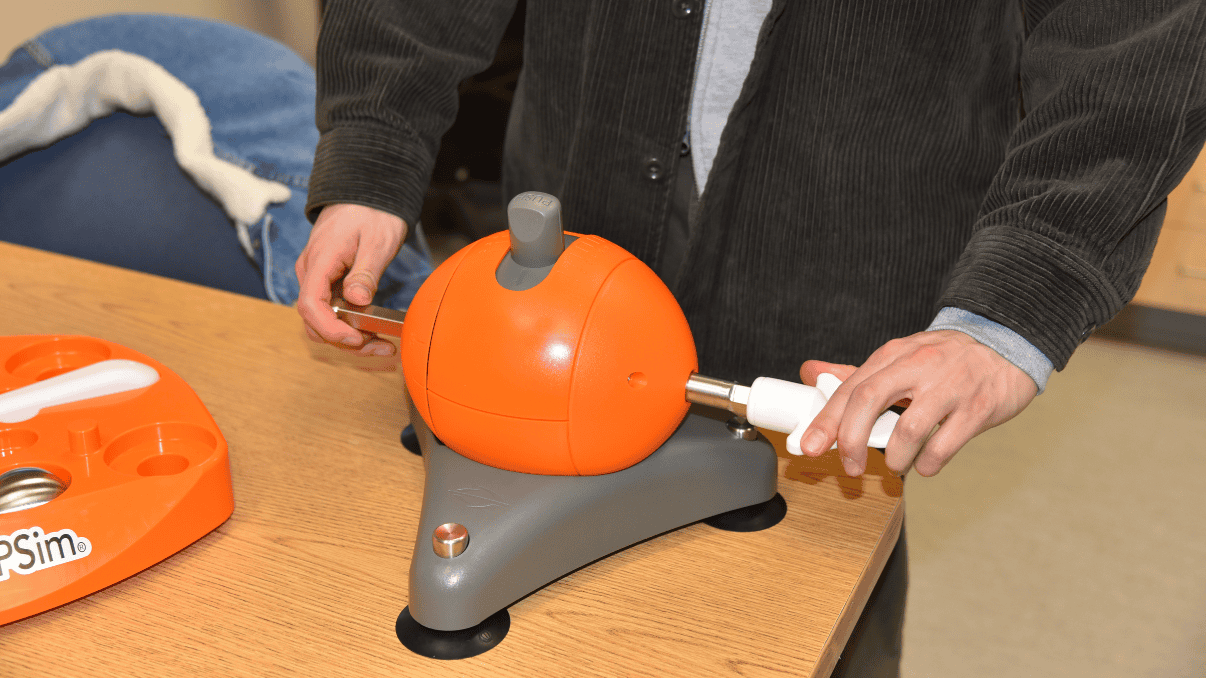
Built by Edmonton-based Karma Medical Products, the device provides patients and therapists with a practical tool that focuses on the motions people use every day.
FEPSim takes its name from four simple motions essential to daily function: flexion (bending), extension (straightening), pronation (turning the palm down), and supination (turning it up). Together, these motions form the foundation for countless everyday tasks, such as lifting a cup, turning a doorknob, or shaking someone’s hand.
The device supports recovery from injuries and neurological conditions where movement must be rebuilt. It also helps people living with arthritis, tendon issues, or complex regional pain syndrome safely regain strength and mobility.
“FEPSim turns repetitive therapy into meaningful, real-world movement,” says Short. “Patients can now practice the same gripping, turning, and lifting actions they need in daily life, while therapists easily adjust resistance and track progress. It bridges the gap between low-tech tools and costly robotics, offering clinics a simple, portable way to keep therapy engaging and effective.”
For patients, the technology turns these motions into hands-on practice that builds both skill and confidence. Therapists can adjust resistance to match recovery stages, helping each session feel natural and motivating.
Funding from the Glenrose Hospital Foundation, supported through Prairies Economic Development Canada (PrairiesCan), played a key role in advancing this technology, helping turn innovative ideas into proven solutions that strengthen care and expand access for people in need of rehabilitation.
“The Glenrose Hospital Foundation’s funding and access to therapists were critical in moving FEPSim from prototype to proven clinical tool,” Short adds. “Their team provided real-world testing, patient feedback, and validation that shaped both the product and its protocols. That was vital.”
Clinical trials support what patients and providers observe every day: measurable improvements in grip strength and wrist mobility, accompanied by high satisfaction and consistent use.
“FEPSim reflects the kind of innovation that changes lives,” says Mark Korthuis, CEO of the Glenrose Hospital Foundation. “By supporting advancements like this, we’re seeing firsthand how creative, practical solutions can help Albertans recover faster, regain function, and return to the activities and independence that matter most to them.”
As Karma looks ahead, the company is building on what it has learned.
“Next-generation FEPSim devices will integrate digital sensors and data tracking, allowing therapists to monitor progress remotely,” Short concludes. “By bridging hospital and community care, our goal remains the same — to help people rebuild strength and independence faster, wherever recovery happens.”