Anyone who has dealt with tennis elbow knows how debilitating it can be. Despite countless stretches, braces, or physio sessions, the pain often lingers for months, making even basic activities painful and frustrating.
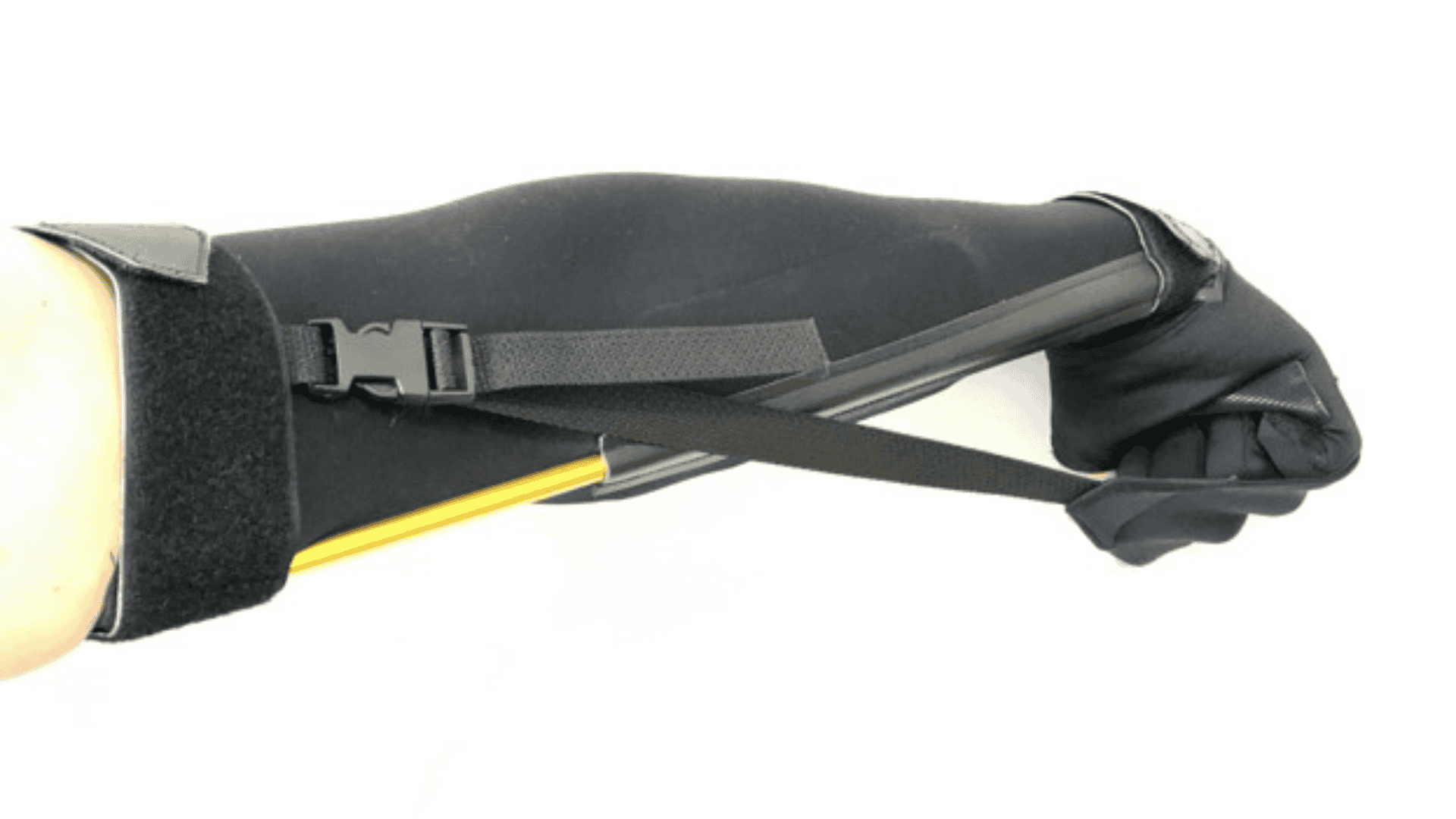
The majority of tennis elbow is not from racket sports, but from repetitive activity. While most treatments focus strictly on the elbow, that’s not where the problem starts. Tight forearm muscles create tension and pain in the joint, making recovery feel slow. A new brace called ArmLock provides a gentle, sustained stretch to the muscles involved in tennis elbow.
“This is a completely novel approach to treating this chronic condition,” says Mark Laurensse, physiotherapist and CEO at Tennis Elbow R&D. “The advantage of the ArmLock is that the brace acts as the therapist, enabling patients to treat themselves in the comfort of their own home.”
Instead of providing temporary relief, ArmLock targets the source with a wearable brace that lets patients stretch the right muscles at home. Its strength lies in its simplicity. It is easy to use, comfortable, and designed to fit seamlessly into daily routines. By holding a controlled stretch for 30 minutes a day, something that is nearly impossible for patients to do on their own and impractical in a clinic setting, the device delivers consistent, targeted therapy.
“The clinical impact comes when the patient is dedicated to consistently using the brace,” Laurensse adds.
“At the Glenrose Hospital Foundation, we see innovations like ArmLock as a way to reimagine human ability,” says Mark Korthuis, President & CEO, Glenrose Rehabilitation Hospital Foundation. “When patients can take charge of their own care, it leads to stronger outcomes and a better quality of life.”
Results are encouraging, with patients often noticing improvement within two weeks. Over time, mobility increases, strength returns, and pain fades. Research at the University of Alberta confirmed that consistent use of the ArmLock leads to progressive improvements in pain and function. Additional findings show recovery rates nearly double those achieved with traditional methods.
Doctors and physiotherapists are beginning to recommend ArmLock as a powerful addition to their toolkit.
“At the Royal Alexandra Hospital, I noticed Dr. Jaswinder Singh was wearing a tennis elbow compression strap,” says Laurensse. “When I assessed his arm, his muscles were very tight. After using the ArmLock consistently, he made a complete recovery in just six weeks. He now recommends the brace to his own patients.”
Support from the Glenrose Hospital Foundation and Prairies Economic Development Canada (PrairiesCan) helped advance this innovation. Their investment enabled design improvements, enhanced manufacturing efficiency, and exploration of scalable production so the device can reach more people who need it.
“Patients and staff need solutions that enhance the rehabilitation journey,” says Korthuis. “By supporting technologies that can be used at home, we are helping extend care beyond the hospital and into people’s everyday lives.”
“With support from PrairiesCan, the Glenrose Research Centre helped redesign the brace to fit all arm sizes and provided research to validate its effectiveness. This support is critical for ArmLock to gain acceptance in the medical community,” says Laurensse. “That’s what will open the door to improving the way this condition is treated.”
For patients, Laurensse’s innovation offers independence, faster recovery, and a chance to return to everyday life without frequent clinic visits. It is especially valuable for people with accessibility challenges or those living in rural and remote communities. For healthcare providers, it adds a new tool to expand options and improve outcomes.
“Driving progress in care means giving patients confidence that recovery is possible,” Korthuis adds. “ArmLock is a powerful example of how innovation can improve both outcomes and the daily experience of rehabilitation.”
ArmLock is a powerful tool for physicians and therapists, enabling patients to continue their therapy at home. It empowers patients to take charge of their recovery while giving healthcare providers a practical way to improve outcomes. The result is faster healing, greater independence, and a more accessible path to care.